
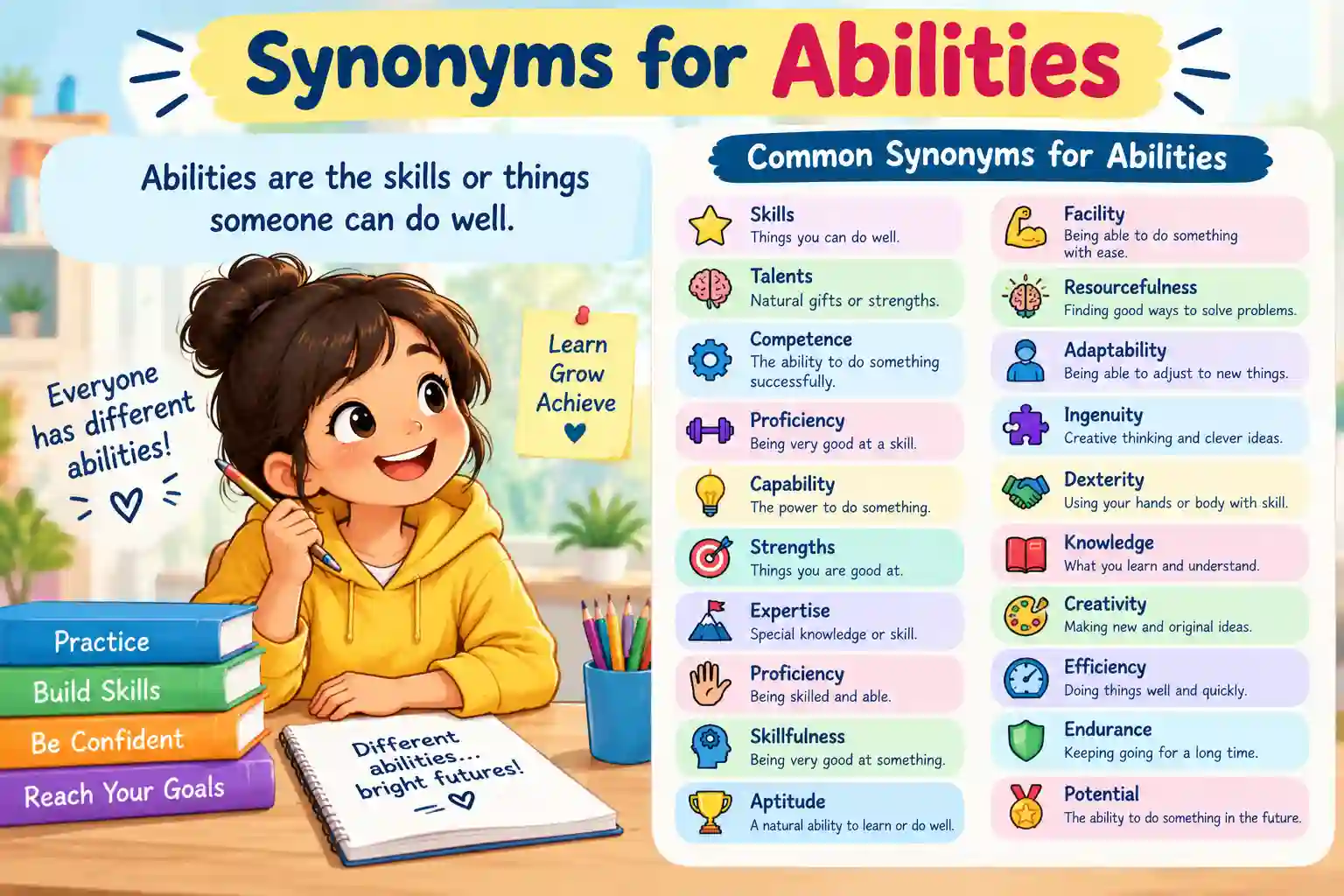
Abilities are skills or powers that help people do things.
Imagine a student who can draw beautiful pictures, solve math problems, and play the piano. Each of these talents is an ability. Another student may be good at sports, cooking, or speaking in front of people. Everyone has different abilities.
The word abilities means the skills, talents, or powers that help someone do a task. These skills can be learned through practice or may come naturally.
Learning synonyms for abilities helps you describe what people can do in different ways. Words like skills, talents, strengths, and capabilities can make your writing more clear and interesting.
Whether you are a student, blogger, content writer, or English learner, these words can help you build a stronger vocabulary and improve your daily communication.
100 Synonyms for Abilities
1. Skills
Meaning: Things someone can do well through learning or practice.
Examples:
- She has great writing skills.
- Good cooking skills can help you make tasty meals.

2. Talents
Meaning: Natural skills that make someone good at something.
Examples:
- He has many talents in music.
- Her painting talents are easy to see.
3. Capabilities
Meaning: The power or skill to do something.
Examples:
- She has the capabilities to lead the team.
- This computer has many useful capabilities.
4. Strengths
Meaning: Things that someone does very well.
Examples:
- Reading and writing are her strengths.
- The coach knows the strengths of each player.
5. Aptitudes
Meaning: Natural skills that help someone learn or do something well.
Examples:
- He has an aptitude for math.
- Her artistic aptitude became clear at school.
6. Competencies
Meaning: Skills and knowledge needed to do a job well.
Examples:
- The job needs strong computer competencies.
- Good communication competencies help workers succeed.
7. Proficiencies
Meaning: Skills that someone has learned to use well.
Examples:
- She has strong language proficiencies.
- His computer proficiencies helped him get the job.
8. Powers
Meaning: The ability or strength to do something.
Examples:
- The child has the power to solve hard puzzles.
- Good leaders use their powers to help others.
9. Faculties
Meaning: Natural mental or physical powers that help someone do things.
Examples:
- Reading is one of her strongest mental faculties.
- Our thinking faculties help us solve problems.
10. Gifts
Meaning: Natural talents that make someone good at something.
Examples:
- She has a gift for singing.
- His gift for drawing makes him special.
11. Expertise
Meaning: Great skill and knowledge in a certain area.
Examples:
- She has expertise in web design.
- His expertise makes him a good teacher.
12. Knacks
Meaning: Special skills that make a task easy for someone.
Examples:
- He has a knack for fixing things.
- She has a knack for making people laugh.
13. Aptitudes and Skills
Meaning: Natural talents and learned skills that help someone do a task.
Examples:
- The job needs different aptitudes and skills.
- Her aptitudes and skills make her a strong worker.
14. Potential
Meaning: The chance or power to become good at something.
Examples:
- The young player has great potential.
- She has the potential to become a great artist.
15. Proficiency
Meaning: The skill to do something well.
Examples:
- His English proficiency is very good.
- She gained proficiency in using a computer.
16. Competence
Meaning: The skill and knowledge needed to do something properly.
Examples:
- Her competence makes her a good team leader.
- He showed great competence at work.
17. Talents and Skills
Meaning: Natural gifts and learned ways of doing things well.
Examples:
- The school helps children develop their talents and skills.
- Her talents and skills make her a great artist.
18. Strengths and Skills
Meaning: Things someone does well through natural talent or practice.
Examples:
- The coach noticed his strengths and skills.
- Her strengths and skills helped the team win.
19. Know-How
Meaning: Practical knowledge of how to do something.
Examples:
- He has the know-how to repair a bike.
- Her business know-how helped her start a shop.
20. Mastery
Meaning: A very high level of skill in something.
Examples:
- She showed mastery of the piano.
- His mastery of English helped him teach others.
21. Aptitude for Learning
Meaning: The natural skill to learn new things quickly.
Examples:
- She has a strong aptitude for learning languages.
- His aptitude for learning helped him in school.
22. Mental Skills
Meaning: Skills that help someone think, learn, and solve problems.
Examples:
- Reading improves your mental skills.
- Good mental skills help students learn.
23. Physical Skills
Meaning: Skills that help someone move and use their body well.
Examples:
- Swimming helps children build physical skills.
- The player has excellent physical skills.
24. Creative Skills
Meaning: Skills that help someone make new and interesting things.
Examples:
- Drawing helps children develop creative skills.
- She uses her creative skills to design cards.
25. Communication Skills
Meaning: Skills that help someone share ideas and talk with others.
Examples:
- Good communication skills are useful at work.
- His communication skills help him make friends.
26. Leadership Skills
Meaning: Skills that help someone guide and support a group.
Examples:
- She has strong leadership skills.
- Good leadership skills help a team work together.
27. Problem-Solving Skills
Meaning: Skills that help someone find answers to problems.
Examples:
- Math can improve your problem-solving skills.
- His problem-solving skills helped the team.
28. Social Skills
Meaning: Skills that help someone get along with other people.
Examples:
- Children learn social skills by playing together.
- Her social skills help her make new friends.
29. Technical Skills
Meaning: Skills used to work with tools, machines, or technology.
Examples:
- The job needs strong technical skills.
- He learned technical skills at college.
30. Practical Skills
Meaning: Skills that help someone do useful tasks in daily life.
Examples:
- Cooking is one of her practical skills.
- Practical skills help people solve daily problems.
31. Artistic Skills
Meaning: Skills used to create art, music, or other creative work.
Examples:
- She uses her artistic skills to paint.
- His artistic skills make his drawings special.
32. Language Skills
Meaning: Skills used to read, write, speak, and understand languages.
Examples:
- Reading books can improve language skills.
- She has strong language skills in English.
33. Learning Skills
Meaning: Skills that help someone understand and remember new things.
Examples:
- Good learning skills help students in class.
- Reading every day can build learning skills.
34. Thinking Skills
Meaning: Skills that help someone understand ideas and make choices.
Examples:
- Puzzles can improve thinking skills.
- Her thinking skills helped her find an answer.
35. People Skills
Meaning: Skills that help someone work and talk well with others.
Examples:
- Good people skills are useful in business.
- His people skills make him a great team member.
36. Work Skills
Meaning: Skills that help someone do a job well.
Examples:
- She learned useful work skills at her new job.
- Good work skills can help you find a job.
37. Job Skills
Meaning: Skills needed to complete tasks in a job.
Examples:
- The course teaches important job skills.
- His job skills helped him get a new role.
38. Professional Skills
Meaning: Skills used to do work in a skilled and proper way.
Examples:
- She wants to improve her professional skills.
- Good professional skills help workers grow.
39. Personal Strengths
Meaning: Good qualities and skills that make someone strong in different areas.
Examples:
- Honesty and patience are her personal strengths.
- The teacher asked us to list our personal strengths.
40. Natural Talents
Meaning: Skills that someone has without much training.
Examples:
- Singing is one of his natural talents.
- Her natural talents became clear at a young age.
41. Special Skills
Meaning: Skills that help someone do certain tasks well.
Examples:
- The job needs special skills.
- She has special skills in baking cakes.
42. Hidden Talents
Meaning: Skills that someone has but has not shown before.
Examples:
- The school show helped him share his hidden talents.
- She found her hidden talents through art.
43. Unique Skills
Meaning: Special skills that make someone different from others.
Examples:
- He has unique skills in music.
- Her unique skills helped the team.
44. Core Skills
Meaning: Main skills that someone needs for daily life or work.
Examples:
- Reading and writing are core skills.
- The course teaches core skills for new workers.
45. Basic Skills
Meaning: Simple skills needed for everyday tasks.
Examples:
- Children learn basic skills at school.
- Good reading is one of the basic skills.
46. Advanced Skills
Meaning: High-level skills that need more learning or practice.
Examples:
- She learned advanced computer skills.
- The course helps workers build advanced skills.
47. Special Abilities
Meaning: Skills or powers that are not common in everyone.
Examples:
- The young artist has special abilities.
- His special abilities helped him solve the puzzle.
48. Natural Abilities
Meaning: Skills or powers that someone is born with.
Examples:
- She has natural abilities in music.
- His natural abilities made learning sports easy.
49. Personal Abilities
Meaning: Skills or powers that belong to one person.
Examples:
- The test checks each student’s personal abilities.
- She uses her personal abilities to help others.
50. Mental Abilities
Meaning: Powers of the mind that help someone think and learn.
Examples:
- Reading can help develop mental abilities.
- His mental abilities helped him solve the problem.
51. Physical Abilities
Meaning: Powers of the body that help someone move and act.
Examples:
- Sports can help improve physical abilities.
- The coach checked the players’ physical abilities.

52. Creative Abilities
Meaning: Skills or powers that help someone create new ideas.
Examples:
- Her creative abilities help her design clothes.
- The art class develops children’s creative abilities.
53. Leadership Abilities
Meaning: Skills that help someone guide a team or group.
Examples:
- He showed strong leadership abilities at school.
- Her leadership abilities helped the group finish the task.
54. Communication Abilities
Meaning: Skills that help someone share thoughts and understand others.
Examples:
- Good communication abilities help at work.
- She uses her communication abilities to teach children.
55. Problem-Solving Abilities
Meaning: Skills that help someone find ways to fix problems.
Examples:
- The game tests children’s problem-solving abilities.
- His problem-solving abilities helped the team.
56. Decision-Making Skills
Meaning: Skills that help someone make good choices.
Examples:
- Good decision-making skills are useful in life.
- Her decision-making skills helped the team choose a plan.
57. Organizational Skills
Meaning: Skills that help someone plan and keep things in order.
Examples:
- She has excellent organizational skills.
- Good organizational skills help workers manage tasks.
58. Time-Management Skills
Meaning: Skills that help someone use time well.
Examples:
- Time-management skills help students finish their work.
- He improved his time-management skills at college.
59. Computer Skills
Meaning: Skills that help someone use computers and software.
Examples:
- She has good computer skills.
- Computer skills are useful in many jobs.
60. Writing Skills
Meaning: Skills that help someone write clearly and correctly.
Examples:
- Reading books can improve writing skills.
- His writing skills helped him create a good story.
61. Reading Skills
Meaning: Skills that help someone read and understand words.
Examples:
- Daily practice can improve reading skills.
- Her reading skills are getting better.
62. Speaking Skills
Meaning: Skills that help someone speak clearly and with ease.
Examples:
- He wants to improve his speaking skills.
- Good speaking skills help during meetings.
63. Listening Skills
Meaning: Skills that help someone hear and understand what others say.
Examples:
- Good listening skills make better friends.
- The teacher praised her listening skills.
64. Teaching Skills
Meaning: Skills that help someone explain ideas and teach others.
Examples:
- She has excellent teaching skills.
- Good teaching skills help children learn.
65. Artistic Talents
Meaning: Natural skills in drawing, painting, music, or other arts.
Examples:
- Her artistic talents are clear in her paintings.
- The school helps children show their artistic talents.
66. Musical Talents
Meaning: Natural skills in singing or playing music.
Examples:
- He has musical talents and plays the guitar.
- Her musical talents impressed the class.
67. Athletic Skills
Meaning: Skills used in sports and physical games.
Examples:
- The coach noticed his athletic skills.
- Running and jumping help build athletic skills.
68. Sports Abilities
Meaning: Skills that help someone play sports well.
Examples:
- Her sports abilities make her a good player.
- The coach tested the team’s sports abilities.
69. Hand-Eye Coordination
Meaning: The skill of using your hands and eyes together.
Examples:
- Playing tennis can improve hand-eye coordination.
- Good hand-eye coordination helps in many sports.
70. Motor Skills
Meaning: Skills that help someone control body movements.
Examples:
- Drawing helps children build motor skills.
- Riding a bike needs good motor skills.
71. Fine Motor Skills
Meaning: Small movements of the hands and fingers.
Examples:
- Writing helps children improve fine motor skills.
- Buttoning a shirt uses fine motor skills.
72. Gross Motor Skills
Meaning: Large body movements like running, jumping, and walking.
Examples:
- Playing outside helps children build gross motor skills.
- Running and jumping use gross motor skills.
73. Analytical Skills
Meaning: Skills that help someone study facts and understand problems.
Examples:
- Math can improve analytical skills.
- Her analytical skills helped her understand the report.
74. Critical Thinking Skills
Meaning: Skills that help someone think carefully before making a choice.
Examples:
- Reading can build critical thinking skills.
- His critical thinking skills helped him check the facts.
75. Research Skills
Meaning: Skills that help someone find and study useful facts.
Examples:
- Students need good research skills.
- Her research skills helped her write the report.
76. Planning Skills
Meaning: Skills that help someone make plans and follow them.
Examples:
- Good planning skills help with school projects.
- He used his planning skills to arrange the event.
77. Decision Skills
Meaning: Skills that help someone choose what to do.
Examples:
- Good decision skills are useful in daily life.
- She used her decision skills to pick the best plan.
78. Adaptability
Meaning: The ability to change and deal with new situations.
Examples:
- Adaptability helps workers handle change.
- Her adaptability made the new school easier.
79. Flexibility
Meaning: The ability to change plans or ways of working when needed.
Examples:
- Flexibility is useful when plans change.
- His flexibility helped the team finish the work.
80. Resourcefulness
Meaning: The ability to find smart ways to solve problems.
Examples:
- Her resourcefulness helped her fix the broken toy.
- Resourcefulness is useful when things go wrong.
81. Quick Thinking
Meaning: The ability to understand a problem and react fast.
Examples:
- His quick thinking helped stop the mistake.
- Quick thinking is useful in an emergency.
82. Common Sense
Meaning: The ability to make simple and wise choices.
Examples:
- Use common sense when crossing the road.
- Her common sense helped her make a good choice.
83. Judgment
Meaning: The ability to think about a choice and decide what is right.
Examples:
- Good judgment helps people make safe choices.
- The coach trusted her judgment.
84. Memory Skills
Meaning: Skills that help someone remember facts and events.
Examples:
- Memory skills help students during tests.
- Reading every day can support memory skills.
85. Focus
Meaning: The ability to give full attention to a task.
Examples:
- Good focus helps students finish their work.
- She used her focus to solve the puzzle.
86. Concentration
Meaning: The ability to keep your mind on one thing.
Examples:
- Reading needs good concentration.
- His concentration helped him finish the test.
87. Coordination
Meaning: The ability to make different body parts work together.
Examples:
- Dancing needs good coordination.
- The game helped improve her coordination.
88. Stamina
Meaning: The ability to keep doing something for a long time.
Examples:
- Running helps build stamina.
- The long walk tested his stamina.
89. Endurance
Meaning: The ability to keep going during hard or tiring tasks.
Examples:
- Cycling helps improve endurance.
- Her endurance helped her finish the race.
90. Dexterity
Meaning: The skill of using your hands quickly and carefully.
Examples:
- The young artist has great hand dexterity.
- Dexterity helps when making small crafts.
91. Agility
Meaning: The ability to move quickly and easily.
Examples:
- Football players need agility.
- The athlete showed great agility on the field.
92. Talent for Learning
Meaning: A natural skill for learning new things.
Examples:
- She has a talent for learning new languages.
- His talent for learning helps him in class.
93. Gift for Teaching
Meaning: A natural skill for helping others learn.
Examples:
- My sister has a gift for teaching children.
- Her gift for teaching makes lessons fun.
94. Gift for Communication
Meaning: A natural skill for sharing ideas and talking with people.
Examples:
- He has a gift for communication.
- Her gift for communication helps her at work.
95. Practical Know-How
Meaning: The knowledge and skill needed to do real tasks.
Examples:
- He has practical know-how in car repair.
- Practical know-how helps people solve daily problems.
96. Working Knowledge
Meaning: Enough knowledge and skill to use something properly.
Examples:
- She has a working knowledge of computers.
- A working knowledge of English helps at work.
97. Natural Flair
Meaning: A natural skill for doing something well and with ease.
Examples:
- He has a natural flair for cooking.
- Her natural flair for design is clear.
98. Special Talent
Meaning: A natural skill that makes someone good at a certain task.
Examples:
- Singing is her special talent.
- His special talent for drawing surprised everyone.
99. Strong Points
Meaning: The things someone does especially well.
Examples:
- Math and science are his strong points.
- The teacher asked us to share our strong points.
100. Areas of Strength
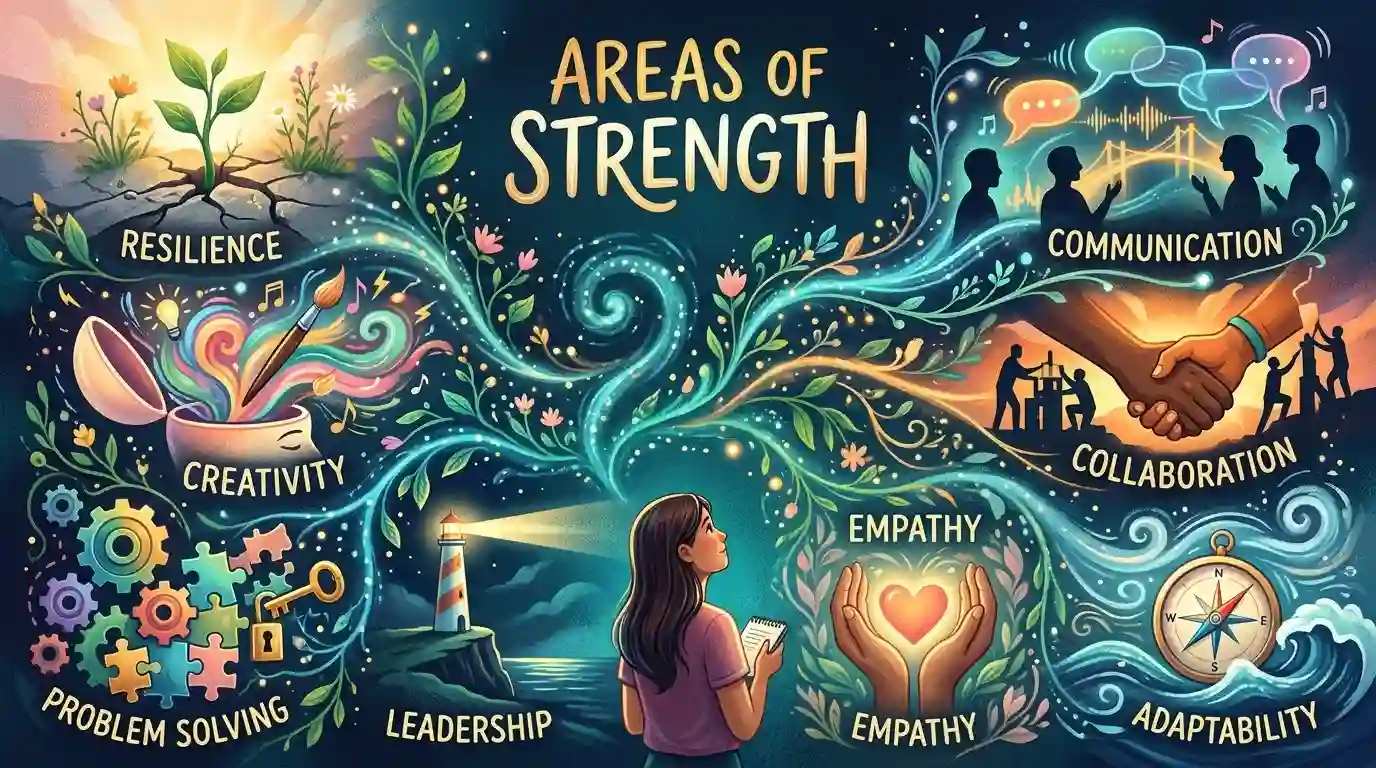
Meaning: The tasks or subjects in which someone performs well.
Examples:
- Writing is one of her areas of strength.
- The coach helped each player find their areas of strength.
Conclusion
Learning abilities synonyms can help you describe people’s skills, talents, and strengths in better ways. Words like capabilities, aptitudes, expertise, and proficiency can improve your writing and speaking. They are useful for students, bloggers, and content writers. Practice these words in daily talks and writing to build a stronger vocabulary and express your ideas clearly.
