
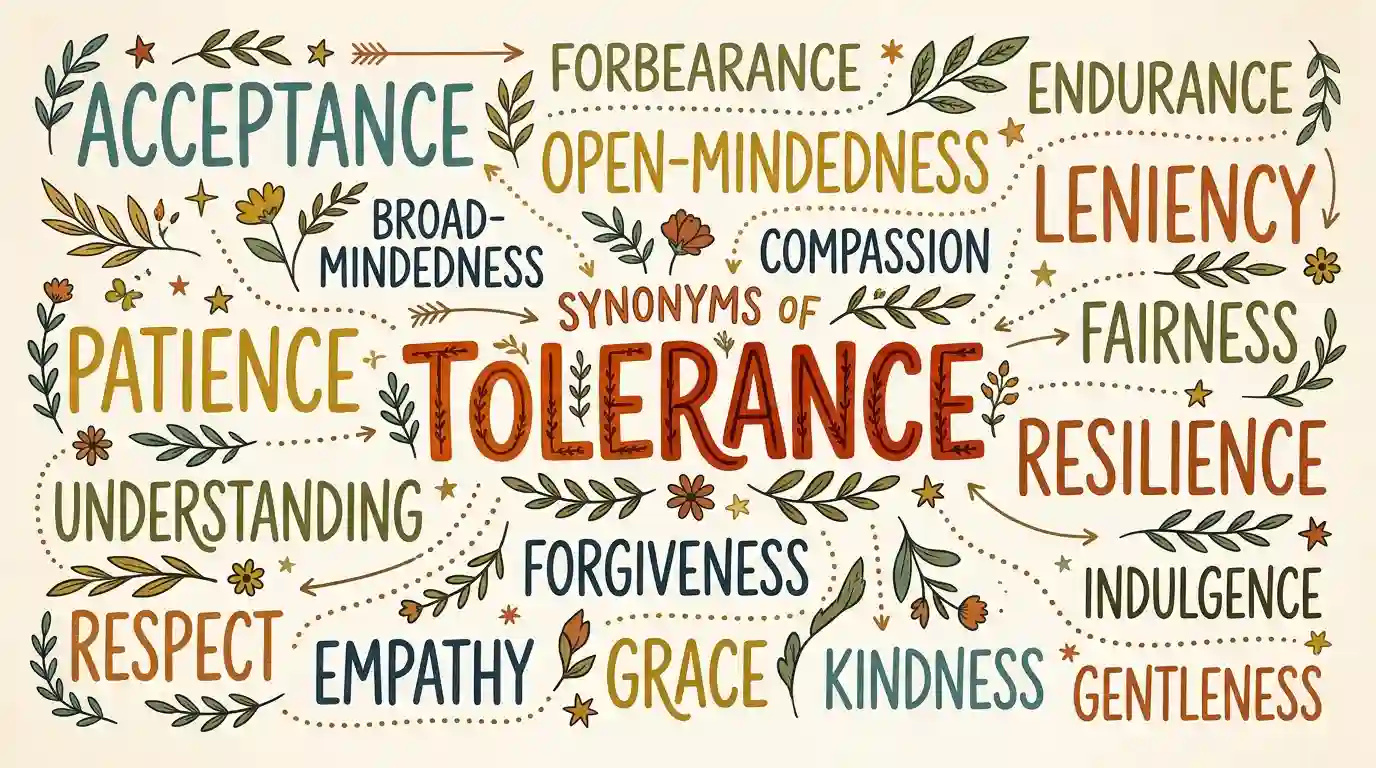
Tolerance means accepting or bearing things without anger.
A new student joins a class. He speaks a different language and has new ways of doing things. His classmates listen, respect him, and give him time to feel at home. Their actions show tolerance.
Tolerance means accepting people, ideas, or habits that are different from your own. It can also mean staying calm when something is hard to bear. In some cases, it means allowing small changes or differences.
Learning tolerance synonyms helps you express these ideas in a clear way. Students, bloggers, content writers, and English learners can use these words to improve their writing and speaking.
Here are 100 synonyms and useful alternatives for tolerance, with simple meanings and examples.
1. Acceptance
Meaning: The act of allowing or respecting people, ideas, or things as they are.
Examples:
- Acceptance of others helps build strong friendships.
- Her acceptance of new ideas made the talk easier.
2. Forbearance
Meaning: The ability to stay calm and not get angry when someone upsets you.
Examples:
- He showed forbearance when his little brother broke the toy.
- Her forbearance helped end the argument.
3. Patience
Meaning: The ability to wait or deal with trouble without getting upset.
Examples:
- Teaching young children takes patience.
- She showed patience while helping her friend learn.
4. Endurance
Meaning: The ability to face pain, trouble, or hard times without giving up.
Examples:
- The long walk tested his endurance.
- Her endurance helped her finish the race.
5. Open-mindedness
Meaning: The habit of listening to ideas that are different from your own.
Examples:
- Open-mindedness helps us learn from others.
- His open-mindedness made the group stronger.
6. Broad-mindedness
Meaning: The ability to accept different views and ways of life.
Examples:
- Broad-mindedness helps people live together in peace.
- Her broad-mindedness made new students feel welcome.
7. Understanding
Meaning: The ability to see why someone feels or acts in a certain way.
Examples:
- A little understanding can stop a big fight.
- He showed understanding when his friend made a mistake.
8. Respect
Meaning: Treating people and their views with care.
Examples:
- Respect for others is part of tolerance.
- The class showed respect for every student’s views.
9. Respectfulness
Meaning: The habit of treating others in a kind and fair way.
Examples:
- Respectfulness makes group work easier.
- Her respectfulness helped everyone feel safe.

10. Leniency
Meaning: A choice to be less strict when someone makes a mistake.
Examples:
- The teacher showed leniency when the student was late.
- The coach used leniency for a first mistake.
11. Mercy
Meaning: Kindness shown to someone who could be treated more harshly.
Examples:
- The judge showed mercy to the young man.
- She asked for mercy after making a mistake.
12. Clemency
Meaning: Kindness shown by someone who has the power to punish.
Examples:
- The leader showed clemency toward the young worker.
- The family hoped for clemency in the case.
13. Indulgence
Meaning: Allowing someone to do or have something, even when it may not be needed.
Examples:
- His parents showed indulgence when he asked for one more treat.
- A little indulgence made the child happy.
14. Permissiveness
Meaning: The habit of allowing people to do many things without strict rules.
Examples:
- Too much permissiveness can make class rules hard to follow.
- The school balanced freedom with care and guidance.
15. Allowance
Meaning: Permission for something to happen or be accepted.
Examples:
- The rules make allowance for small errors.
- We should make an allowance for her busy day.
16. Leeway
Meaning: Extra freedom or room to act without strict limits.
Examples:
- The teacher gave us leeway to choose our topics.
- The team needs some leeway to finish the task.
17. Latitude
Meaning: Freedom to make choices or act in your own way.
Examples:
- The coach gave players some latitude.
- Students have latitude to pick their own books.
18. Flexibility
Meaning: The ability to change or accept different ways of doing things.
Examples:
- Flexibility helps when plans change.
- Her flexibility made the team work better.
19. Accommodation
Meaning: A change made to meet someone’s needs or accept a difference.
Examples:
- The school made an accommodation for the new student.
- Good accommodation can help everyone join the class.
20. Adaptability
Meaning: The ability to adjust to new people, places, or situations.
Examples:
- Adaptability helps children settle into a new school.
- His adaptability made the move easier.
21. Tact
Meaning: The skill of speaking or acting without hurting someone’s feelings.
Examples:
- She used tact when she gave him advice.
- Tact can help people talk about hard topics.
22. Restraint
Meaning: The ability to control your words or actions when upset.
Examples:
- He showed restraint during the heated talk.
- Her restraint kept the argument from growing.
23. Self-control
Meaning: The ability to manage your feelings and actions.
Examples:
- Self-control helped him stay calm.
- She used self-control when her brother teased her.
24. Composure
Meaning: A calm state of mind, even during a hard time.
Examples:
- She kept her composure during the meeting.
- His composure helped the team stay calm.
25. Calmness
Meaning: The state of staying peaceful and not getting angry.
Examples:
- Calmness helped her deal with the noisy room.
- His calmness made the talk easier.
26. Serenity
Meaning: A quiet and peaceful state of mind.
Examples:
- She faced the problem with serenity.
- His serenity helped calm the worried child.
27. Equanimity
Meaning: The ability to stay calm when things go well or badly.
Examples:
- She handled the bad news with equanimity.
- His equanimity helped him face the challenge.
28. Complacency
Meaning: Being too pleased with things as they are and not trying to improve them.
Examples:
- Tolerance should not turn into complacency about unfair acts.
- The team must avoid complacency after one win.
29. Nonjudgment
Meaning: The choice to avoid judging people for their differences.
Examples:
- Nonjudgment helps people feel safe sharing their views.
- She listened with nonjudgment when he spoke.
30. Nonjudgmental attitude
Meaning: A way of treating people without blaming or judging them.
Examples:
- The nurse had a nonjudgmental attitude toward every patient.
- A nonjudgmental attitude can build trust.
31. Inclusiveness
Meaning: Making sure people feel welcome, no matter how they are different.
Examples:
- Inclusiveness helps every child feel part of the class.
- The club values inclusiveness and fair play.
32. Inclusion
Meaning: The act of giving everyone a chance to take part.
Examples:
- Inclusion helps all students join school events.
- The group supports the inclusion of new members.
33. Equality
Meaning: Giving people the same rights and fair chances.
Examples:
- Equality means every child deserves a fair chance.
- The school teaches equality and respect.
34. Fairness
Meaning: Treating people in a just and honest way.
Examples:
- Fairness means listening to both sides.
- The teacher showed fairness when solving the problem.
35. Impartiality
Meaning: Treating people fairly without taking sides.
Examples:
- The judge showed impartiality during the case.
- Impartiality helps settle a dispute fairly.
36. Neutrality
Meaning: Not taking one side in a disagreement.
Examples:
- The teacher kept neutrality during the class debate.
- Neutrality helped him hear both sides.
37. Even-handedness
Meaning: Treating everyone in the same fair way.
Examples:
- The coach showed even-handedness when choosing players.
- Even-handedness helps build trust.
38. Open acceptance
Meaning: A willing choice to welcome people or ideas that are different.
Examples:
- Open acceptance helped the new family feel at home.
- The group showed open acceptance of different views.
39. Mutual respect
Meaning: When people treat one another with care, even if they disagree.
Examples:
- Mutual respect helps friends solve problems.
- The team works well because of mutual respect.
40. Peaceful coexistence
Meaning: Living together in peace despite having different views or ways of life.
Examples:
- Peaceful coexistence helps people from many groups live together.
- The town is known for peaceful coexistence.
41. Harmony
Meaning: A peaceful state in which people get along.
Examples:
- Tolerance can help bring harmony to a family.
- The neighbors lived in harmony for many years.
42. Cooperation
Meaning: Working together even when people have different ideas.
Examples:
- Cooperation helped the students finish the task.
- The teams showed cooperation during the game.
43. Goodwill
Meaning: A kind and friendly feeling toward other people.
Examples:
- Goodwill helped the two groups become friends.
- She showed goodwill toward her new neighbors.
44. Kindness
Meaning: Being caring and gentle toward others.
Examples:
- Kindness makes it easier to accept differences.
- He showed kindness to the new student.
45. Compassion
Meaning: Caring about someone who is having a hard time.
Examples:
- Compassion helped her understand her friend’s pain.
- The nurse treated every patient with compassion.
46. Empathy
Meaning: The ability to understand how another person feels.
Examples:
- Empathy helps us understand people with different views.
- He showed empathy when his friend felt sad.
47. Sympathy
Meaning: Caring about someone who is sad or in trouble.
Examples:
- She showed sympathy when her friend lost his pet.
- His sympathy helped the family feel less alone.
48. Consideration
Meaning: Thinking about other people’s needs and feelings.
Examples:
- Consideration for others makes sharing easier.
- He showed consideration by letting her speak first.
49. Thoughtfulness
Meaning: Care for the feelings and needs of others.
Examples:
- Her thoughtfulness helped the new student feel welcome.
- Thoughtfulness can make a hard day better.
50. Gentleness
Meaning: The habit of acting in a soft and kind way.
Examples:
- He used gentleness when speaking to the upset child.
- Her gentleness helped calm the room.
51. Mildness
Meaning: A soft or gentle way of acting instead of being harsh.
Examples:
- His mildness helped settle the disagreement.
- She answered with mildness rather than anger.
52. Softness
Meaning: A gentle way of speaking or acting.
Examples:
- She spoke with softness when her friend was upset.
- His softness helped the child feel safe.
53. Good nature
Meaning: A kind and friendly way of treating people.
Examples:
- His good nature helped him get along with others.
- She showed her good nature by helping the new family.
54. Good temper
Meaning: The habit of staying pleasant and not getting angry easily.
Examples:
- His good temper helped him deal with noisy children.
- She kept her good temper during the long wait.
55. Long-suffering
Meaning: Able to bear trouble or annoying behavior for a long time without anger.
Examples:
- The long-suffering teacher stayed calm during the noisy lesson.
- His long-suffering nature helped him care for his little brothers.
56. Tolerance of differences
Meaning: Accepting that people may think, speak, or live in different ways.
Examples:
- Tolerance of differences makes a school more welcoming.
- The club teaches tolerance of differences.
57. Acceptance of differences
Meaning: Respecting people even when they do not share your habits or beliefs.
Examples:
- Acceptance of differences can bring people closer.
- Our class promotes acceptance of differences.
58. Respect for diversity
Meaning: Valuing people from different backgrounds and ways of life.
Examples:
- Respect for diversity helps build a fair school.
- The event taught children respect for diversity.
59. Cultural acceptance
Meaning: Respecting the customs and ways of life of other groups.
Examples:
- Cultural acceptance helps people learn from one another.
- The school promotes cultural acceptance.
60. Religious acceptance
Meaning: Respecting people who follow different faiths or beliefs.
Examples:
- Religious acceptance can help neighbors live in peace.
- The lesson focused on religious acceptance.
61. Freedom of thought
Meaning: The right to hold your own ideas and beliefs.
Examples:
- Freedom of thought lets people share different views.
- The group supports freedom of thought.
62. Freedom of belief
Meaning: The right to choose what you believe.
Examples:
- Freedom of belief is important in a fair society.
- The law protects freedom of belief.

63. Open-minded attitude
Meaning: A way of thinking that welcomes new ideas and views.
Examples:
- An open-minded attitude helps during a debate.
- She showed an open-minded attitude toward the new plan.
64. Willingness to listen
Meaning: Being ready to hear what others think before you judge.
Examples:
- A willingness to listen can prevent fights.
- His willingness to listen helped solve the issue.
65. Readiness to accept
Meaning: Being willing to allow or welcome something different.
Examples:
- Her readiness to accept change helped the team.
- Readiness to accept new ideas is a useful skill.
66. Room for differences
Meaning: Allowing people to have their own views and habits.
Examples:
- A good team makes room for differences.
- Our family leaves room for differences in opinion.
67. Giving others a chance
Meaning: Letting people show who they are before making a choice about them.
Examples:
- Giving others a chance can lead to new friendships.
- The coach believes in giving others a chance.
68. Acceptance without judgment
Meaning: Welcoming people without blaming them for being different.
Examples:
- Acceptance without judgment helps people speak freely.
- She offered acceptance without judgment to her friend.
69. Respectful disagreement
Meaning: Having a different view while still treating others with care.
Examples:
- Respectful disagreement can make a class debate useful.
- They had a respectful disagreement about the plan.
70. Agreeing to differ
Meaning: Accepting that people may not share the same opinion.
Examples:
- They chose to agree to differ after the talk.
- Friends can agree to differ and still care for each other.
71. Acceptance of change
Meaning: Being willing to deal with new ways or situations.
Examples:
- Acceptance of change helped the family move to a new town.
- The team showed acceptance of change after the new rules.
72. Adaptation
Meaning: The act of changing to fit a new situation.
Examples:
- Adaptation to a new school takes time.
- The team’s adaptation helped them work well together.
73. Adjustment
Meaning: A small change made to fit a new need or situation.
Examples:
- The teacher made an adjustment for the new student.
- A little adjustment made the plan work better.
74. Compromise
Meaning: An agreement where each side gives up something to find a fair answer.
Examples:
- They reached a compromise about the game.
- Compromise helped the friends end their fight.
75. Give-and-take
Meaning: A fair way of dealing with others where each side makes some changes.
Examples:
- Good friendships need give-and-take.
- The plan worked because of give-and-take.
76. Concession
Meaning: Something you agree to allow or give up to settle a disagreement.
Examples:
- He made a small concession to end the argument.
- Her concession helped both sides reach a deal.
77. Accommodation of views
Meaning: Making room for opinions that are different from your own.
Examples:
- Accommodation of views helps a team work together.
- The meeting allowed accommodation of views from all members.
78. Broad acceptance
Meaning: Welcoming many different people, ideas, or ways of life.
Examples:
- Broad acceptance helped the club grow.
- The town is known for broad acceptance of new families.
79. Open acceptance of ideas
Meaning: Being ready to hear and consider ideas from other people.
Examples:
- Open acceptance of ideas can lead to better plans.
- The teacher encouraged open acceptance of ideas.
80. Patience with others
Meaning: Staying calm when other people make mistakes or act differently.
Examples:
- Patience with others makes teamwork easier.
- She showed patience with others during the busy day.
81. Ability to endure
Meaning: The power to bear pain, stress, or trouble.
Examples:
- His ability to endure pain helped him finish the race.
- The long trip tested her ability to endure hard times.
82. Capacity to bear
Meaning: The ability to put up with something difficult or unpleasant.
Examples:
- Everyone has a different capacity to bear stress.
- Her capacity to bear hardship surprised us.
83. Pain tolerance
Meaning: How much pain a person can bear.
Examples:
- Pain tolerance can differ from person to person.
- The doctor asked about his pain tolerance.
84. Stress tolerance
Meaning: The ability to deal with stress without becoming too upset.
Examples:
- Good sleep may help with stress tolerance.
- The job needs a high level of stress tolerance.
85. Heat resistance
Meaning: The ability to bear high heat without harm or damage.
Examples:
- This plant has good heat resistance.
- The new material has better heat resistance.
86. Cold resistance
Meaning: The ability to bear cold weather or low heat.
Examples:
- The coat offers good cold resistance.
- Some plants have strong cold resistance.
87. Hardiness
Meaning: The ability to stay strong in hard or harsh conditions.
Examples:
- The hardiness of these plants helps them grow in dry soil.
- Her hardiness helped her face the tough trip.
88. Resilience
Meaning: The ability to recover after trouble or hard times.
Examples:
- Resilience helped him start again after a loss.
- Children can build resilience by facing small challenges.
89. Stamina
Meaning: The strength to keep going during a long or hard task.
Examples:
- The hike needed a lot of stamina.
- She built stamina by walking every day.
90. Staying power
Meaning: The ability to keep going when something is hard.
Examples:
- His staying power helped him finish the long race.
- The team showed staying power during the final match.
91. Toughness
Meaning: The ability to face hard things without giving up.
Examples:
- Her toughness helped her deal with the loss.
- The job needs both skill and toughness.
92. Durability
Meaning: The ability to last or work well for a long time.
Examples:
- The material has good durability in hot weather.
- We tested the durability of the new shoes.
93. Resistance
Meaning: The ability to avoid being harmed or changed by something.
Examples:
- The plant has resistance to some diseases.
- The coating gives the metal resistance to rust.
94. Immunity
Meaning: Protection from a disease or harmful effect.
Examples:
- The vaccine can help build immunity.
- The body uses immunity to fight some infections.
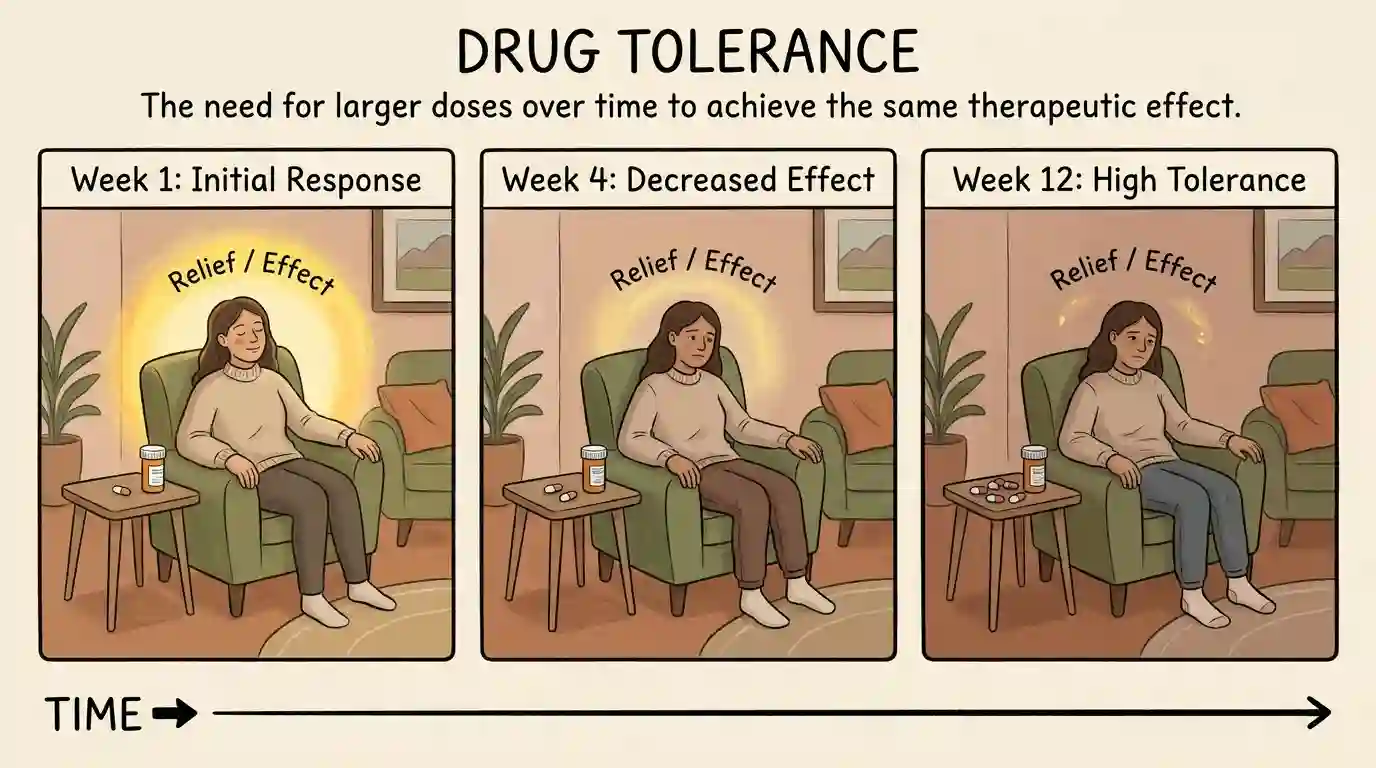
95. Drug tolerance
Meaning: When the body gets used to a drug, so the same amount has less effect.
Examples:
- Drug tolerance can change how a medicine works.
- The doctor explained the risk of drug tolerance.
96. Alcohol tolerance
Meaning: How much alcohol a person’s body can handle before its effects are felt.
Examples:
- Alcohol tolerance varies from person to person.
- A high alcohol tolerance does not make drinking safe.
97. Error allowance
Meaning: The amount of small mistakes or differences that are allowed.
Examples:
- The test has a small error allowance.
- The machine works within its error allowance.
98. Margin of error
Meaning: The amount by which a result may be higher or lower than the true value.
Examples:
- The survey has a small margin of error.
- We must consider the margin of error in the results.
99. Permitted variation
Meaning: The amount of change or difference that is allowed.
Examples:
- The rules allow a small permitted variation in size.
- Each part must stay within the permitted variation.
100. Room for error
Meaning: The amount of small mistakes that can happen without causing a problem.
Examples:
- The plan leaves little room for error.
- The builder checked every part because there was no room for error.
Conclusion
Learning tolerance synonyms can help you explain patience, acceptance, respect, and the ability to bear hard things. Words like understanding, forbearance, flexibility, and endurance can make your writing more clear. Students, bloggers, and writers can use these alternatives in daily talks, school work, and online posts. Practice them in real sentences to improve your English and communication skills.
